Australian Slang Translator for Context-Aware Drafts
Explore an Australian-slang rewrite or turn an unfamiliar colloquial phrase into standard English. Usage varies by speaker, place, age, and situation, so treat every result as an editable AI draft rather than a model of how all Australians speak.
Standard English
0 / 500
Australian Slang
The AI draft will appear here...
Australian Slang Translator Draft Examples
These compact pairs illustrate possible rewrites, not mandatory substitutions. The same source can need different wording in a workplace, group chat, story, or conversation, and a model response may need editing.
English
I will see you this afternoon.
Translation
I'll see you this arvo.
Possible informal rewrite using arvo for afternoon
English
Let us stop at the service station.
Translation
Let's stop at the servo.
Possible rewrite using servo for service station
English
Would you like some breakfast?
Translation
Want some brekkie?
Possible casual rewrite using brekkie for breakfast
English
That is not a problem.
Translation
No worries.
Possible reassurance using no worries
English
That was an excellent match.
Translation
That match was a ripper.
Possible enthusiastic rewrite using ripper
English
Thank you for your help.
Translation
Cheers for the help.
Possible casual thanks using cheers
Context Clues in Australian Colloquial English
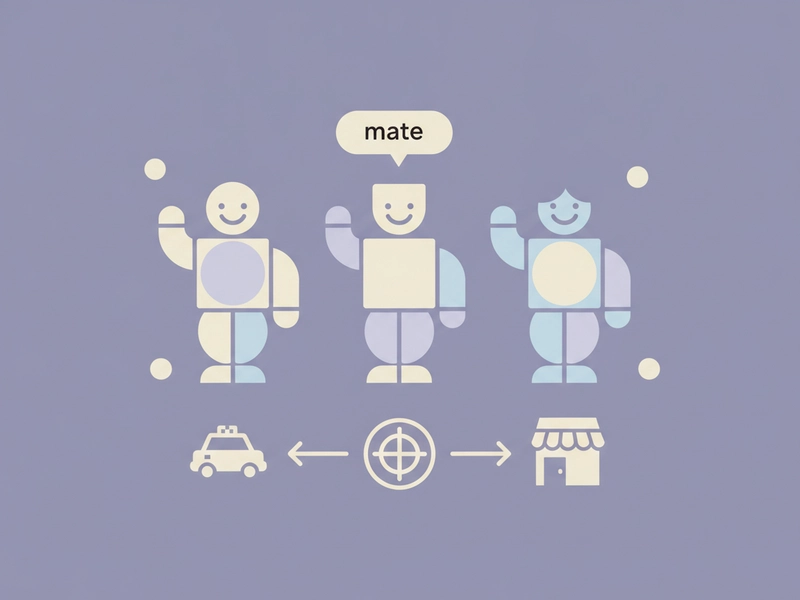
‘Mate’ Is Not Limited to Close Friends
Mate can name a friend or address someone whose relationship to the speaker is less close. Tone, stress, facial expression, and situation can make it warm, neutral, ironic, or confrontational. A text-only rewrite cannot recover all those cues, so replacing every form of address with mate would flatten important social meaning.
‘No Worries’ Does Several Jobs
No worries may acknowledge thanks, accept an apology, reassure someone, or indicate that a request is manageable. Its function depends on the preceding turn and delivery rather than on a single dictionary replacement. That flexibility explains its broad use, but it does not mean every speaker chooses it or every formal setting welcomes it.

Australian Slang Context and Review Tables
| Form | Common Meaning | Context Note |
|---|---|---|
| arvo | afternoon | informal shortening |
| brekkie | breakfast | informal shortening |
| servo | service station | informal shortening |
| uni | university | informal and also used elsewhere |
| no worries | acknowledgment or reassurance | meaning follows the previous turn |
| mate | friend or form of address | tone and relationship can change its force |
Common Shortenings with Context Notes
These examples demonstrate familiar informal forms without claiming universal frequency or regional ownership. They can help you recognize a draft, but they are not a substitution recipe: grammar, tone, collocation, and speaker preference determine whether each form fits a particular sentence.
Review Questions Before You Copy
A useful rewrite preserves intent while changing register selectively. Review the output along several dimensions rather than counting slang words. If the answer to any question is unclear, choose plainer wording or gather more context before sending, publishing, or attributing the phrase to a community.
| Dimension | Review Question | Safer Action |
|---|---|---|
| Meaning | Did any fact or intention change? | Restore the source meaning |
| Audience | Would this relationship use the term? | Prefer neutral wording if unsure |
| Tone | Did friendly become comic or confrontational? | Remove the forced expression |
| Variation | Is a regional claim actually supported? | Avoid an unsupported label |
| Currency | Is the example current in this context? | Check recent Australian usage |
How Australian Slang Changes Across Contexts
Australian English Has Many Sources
Australian English developed through contact among British and Irish varieties, local innovation, migration, media, and borrowing from Aboriginal languages. Borrowed place, plant, and animal names are not automatically slang, and a popular word's history may be disputed. Responsible explanation separates documented etymology from a memorable but unsupported origin story. These varieties continue changing through everyday use.
Colloquial Language Can Signal Belonging
Informal vocabulary can express familiarity, humor, stance, or group membership, but it can also mark distance or exclusion. A visitor does not automatically build rapport by inserting more slang. Listening to how people address one another, matching the formality of the setting, and preserving the original speaker's intent matter more than maximizing local expressions online.

Variation Does Not Follow Simple State Borders
Word choice can vary across regions, generations, professions, ethnic communities, families, and online groups. A term heard in Sydney may also be common elsewhere, while two neighbors may prefer different expressions. Treat confident state-by-state slang lists cautiously unless they cite current linguistic evidence, and ask carefully about the speaker's actual context in real conversations today.
Informal Shortening Patterns
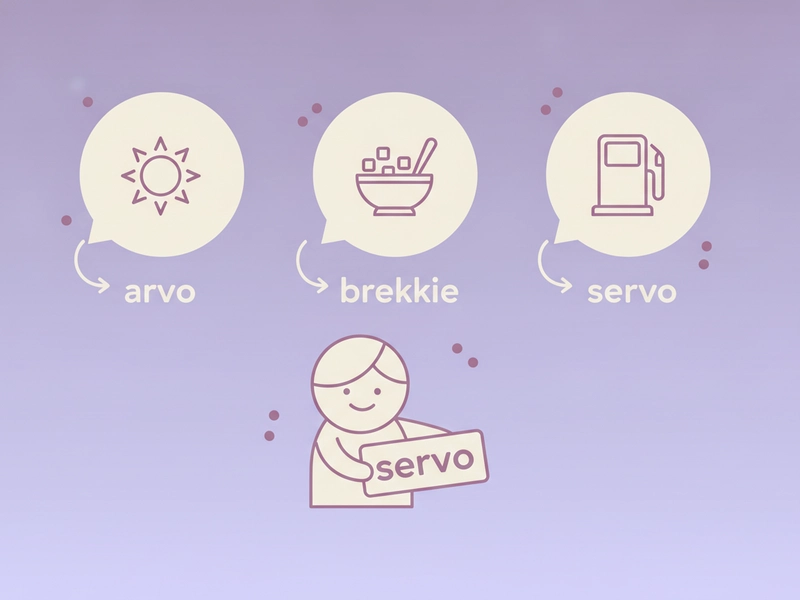
Australian English often creates informal shortenings with endings such as -o, -ie, or -y. Familiar examples include arvo for afternoon, brekkie for breakfast, servo for service station, and uni for university. These patterns are productive but not mechanical rules: speakers choose forms according to context, generation, social group, and personal style, so an invented shortening may sound unnatural.
Australian Slang Translator Features
Two-Panel Comparison
Keep the source visible on the left while reviewing the rewritten or explained text on the right. This supports meaning checks and makes additions, omissions, exaggeration, and unwanted changes in formality easier to notice carefully.
Two Explicit Directions
Switch between a standard-English rewrite and a plain-English explanation of Australian slang. The selected direction changes the server-side instruction for each request, while both modes ask the model to preserve meaning and avoid invented expressions.
Copyable Text Draft
Copy the result only after editing it for your audience. Output remains plain text, making changes straightforward during review; the page does not add usage labels, regional certification, pronunciation audio, or a verified dictionary entry.
Review Reminder
The interface identifies the output as an AI-generated draft. Slang changes quickly and can carry social meanings beyond a literal definition, so verify unfamiliar wording before using it with real people in your intended context.
Frequently Asked Questions
Use these answers to understand the page's scope and the limits of slang rewriting.
Explore More Translator Tools
Check out these related translation and AI tools to enhance your experience
How to Use the Australian Slang Translator
Give the model enough situational context, choose the intended direction, and edit the draft for meaning, tone, audience, and current usage before sharing it.
Step 1: Enter a Short Passage
Paste a short phrase within the displayed character limit. Include who is speaking, the intended tone, or the surrounding sentence when those details affect whether a colloquial expression would fit naturally.
Step 2: Choose the Direction
Select standard English to Australian slang for a rewrite, or Australian slang to standard English for an explanation. Then request the draft and carefully compare it with the original meaning.
Step 3: Review Before Sharing
First remove forced expressions, confirm unfamiliar words with current Australian sources or a knowledgeable speaker, and check whether the result suits the relationship, region, age group, and level of formality.
Explore an Australian Slang Draft
Rewrite or explain a short phrase in the two-panel tool, then edit the result for meaning, audience, tone, and current usage before sharing it.