English and Emoji Translator with Two-Way Drafts
Choose English to emoji for a visual rewrite or emoji to English for one possible interpretation. Emoji do not form a universal language, and the same sequence can carry different meanings across conversations and platforms.
English
0 / 500
Emoji
The AI draft will appear here...
English to Emoji Translator Examples – See It in Action
These are illustrative drafts, not fixed mappings. A model can omit grammar, choose a different symbol, or read a sequence differently when the surrounding conversation, relationship, platform rendering, or cultural context changes.
English
Good morning, how are you today?
Translation
🌅☀️👋❓🤔👤📅
Morning greeting with sun, wave, and question
English
I love pizza and ice cream very much.
Translation
❤️🍕🍦😍
Expression of love for pizza and ice cream
English
It is raining heavily outside, take an umbrella.
Translation
🌧️🌊🚪☂️
Weather warning with rain and umbrella
English
Let's go to the beach and swim in the ocean.
Translation
🏖️🌊🏄♂️🌊
Beach activity suggestion with swimming
English
Congratulations on your new job, you earned it!
Translation
🎉👏💼🎓✅
Celebration for a new job achievement
English
I am feeling sad and lonely tonight.
Translation
😢😔🌃
Sad emotion expressed at night
Fun Facts About Emoji Language
Emoji Emerged from Japanese Mobile Services
Modern emoji history is closely tied to Japanese mobile communication in the late 1990s, including a well-known set designed by Shigetaka Kurita for NTT DoCoMo's i-mode service. Other pictographic systems also preceded and surrounded that work. Historical origin does not fix present meaning, because standards, designs, platforms, and everyday usage continued to change.
One Symbol Can Support Several Readings
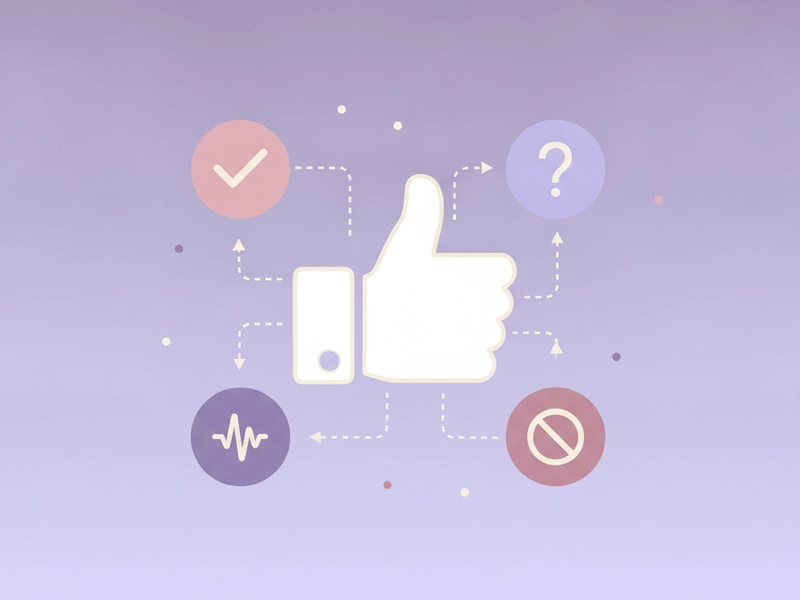
A thumbs-up may signal approval, acknowledgement, irony, dismissal, or another locally understood gesture depending on the people and conversation. Country-level lists often flatten variation within communities and age groups. Treat cultural guidance as a prompt to ask, not a guaranteed lookup table, and avoid using a lone emoji where the stakes require unambiguous wording.
Understanding Emoji Mappings and Cultural Nuances
| English Word | Possible Emoji | Alternatives |
|---|---|---|
| love | ❤️ | 💕😍💗 |
| pizza | 🍕 | 🍕 |
| dog | 🐕 | 🐩🐶 |
| cat | 🐈 | 🐱😸 |
| sun | ☀️ | 🌞🌅 |
| rain | 🌧️ | ☔🌦️ |
| happy | 😊 | 😄😁😃 |
| sad | 😢 | 😭😔☹️ |
Possible Word-to-Emoji Choices
These rows demonstrate alternatives rather than defaults enforced by the tool. A noun may have a fairly direct pictograph, while a verb, adjective, or relationship can require context. Use the table to compare choices and ask what each symbol omits.
Context Checks for Ambiguous Emoji
Avoid assigning one meaning to an entire region. These rows list possible readings and cues to inspect in the surrounding conversation. Communities, generations, platforms, and individual relationships vary, so ask the sender when a symbol affects an important conclusion.
| Emoji | Possible Readings | Context Cue | Safer Action |
|---|---|---|---|
| 👍 | Approval / acknowledgement / irony | Tone and prior message | Ask when stakes are high |
| 🙏 | Thanks / request / prayer | Words and relationship | Retain explanatory text |
| 🖕 | Insult / hostile emphasis | Conflict and audience | Avoid in uncertain contexts |
| 🙌 | Celebration / praise / raised hands | Event and nearby words | Clarify intended reaction |
| 👈 | Direction / reference / emphasis | Screen layout and target | Name the referenced item |
| 😂 | Laughter / strong amusement / irony | Seriousness of the topic | Use words in sensitive messages |
| 🤝 | Agreement / greeting / partnership | Whether consent is explicit | Do not treat it as legal consent |
| 👀 | Watching / interest / suspicion | Relationship and prior message | Ask instead of inferring |
Discover More About Emoji as a Visual Language
From Mobile Sets to Standardized Characters
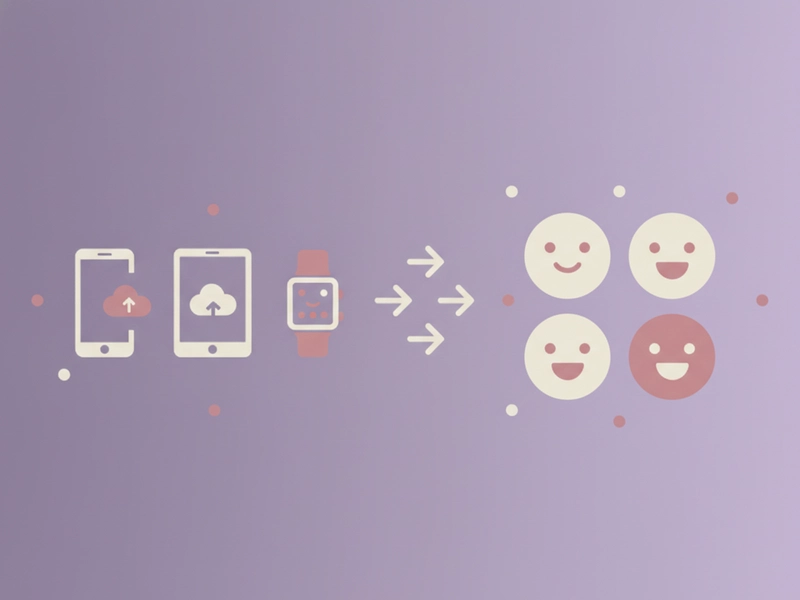
Early mobile services used their own pictograph sets and encodings. Unicode later standardized characters so the same code points could move between systems, while vendors retained control over artwork. Standardization improves interchange but does not make appearance identical: shape, color, detail, animation, and platform version can still affect how a recipient sees and interprets an emoji.
Interpretation Depends on Conversation and Community
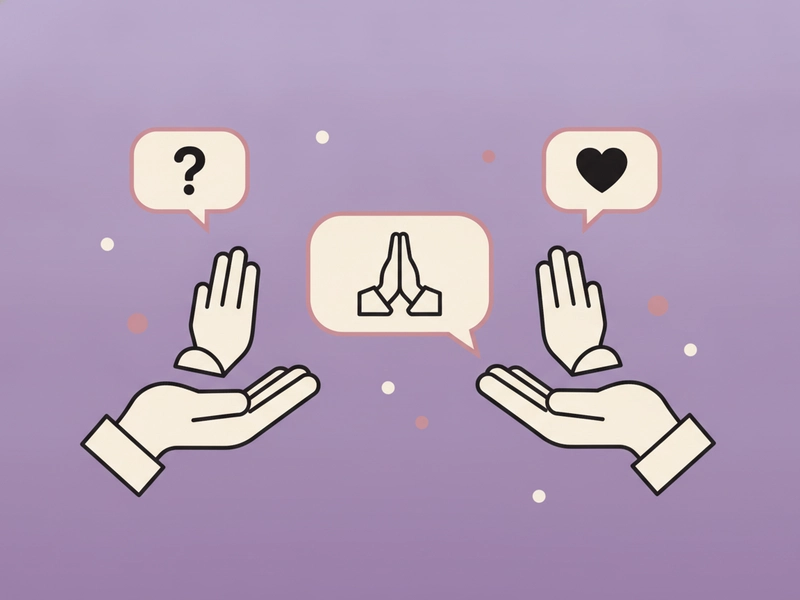
Emoji meaning develops through surrounding text, relationships, community conventions, age, platform, and prior messages. A folded-hands symbol might be read as thanks, a request, prayer, or emphasis without one globally controlling interpretation. When communicating across unfamiliar groups, retain plain wording, watch how participants use the symbol, and ask rather than assigning a national meaning automatically.
Emoji Are Shared Characters, Not a Universal Language
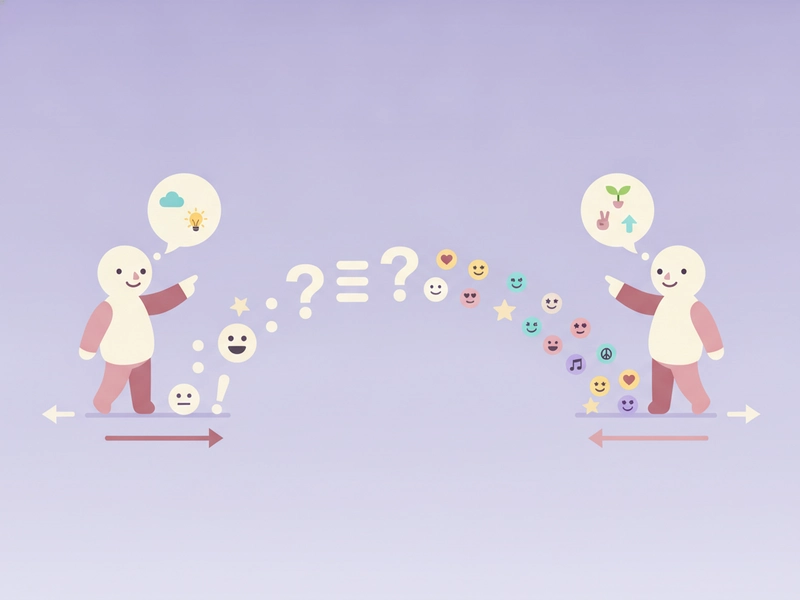
Many people recognize common emoji, but recognition does not guarantee agreement about grammar, tone, reference, or intent. A sequence can omit who did what, when, or whether a statement was serious. Use emoji to supplement language or create a playful draft, not to replace instructions, consent, warnings, accessibility text, or other information that must be understood precisely.
Visual Rewriting Can Prompt Vocabulary Discussion
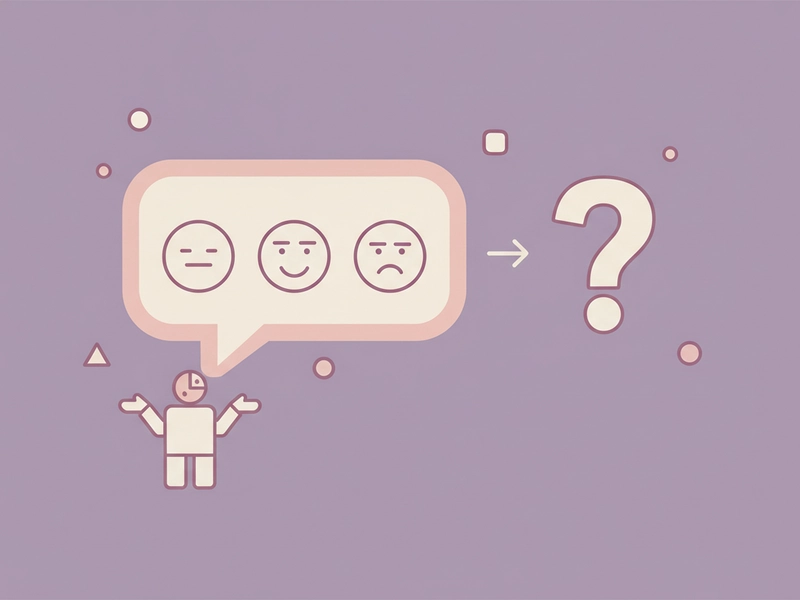
Turning a sentence into emoji can start a discussion about which words carry the action, tense, subject, or emotional tone. It does not teach pronunciation, grammar, or a verified one-to-one vocabulary mapping by itself. Learners should explain their choices in words, compare alternatives, and use teacher-selected language resources when accuracy and progression matter in a lesson.
English and Emoji Translator Review Features
Two-Panel Workflow
The source remains on the left while the proposed rewrite or interpretation appears on the right. Side-by-side review makes omissions and unexpected symbols easier to notice before copying, without claiming that each word has one correct emoji.
Two Explicit Directions
Switch between English-to-emoji rewriting and emoji-to-English interpretation. The source and target labels update with the selected direction. Reverse mode returns one contextual reading, not a definitive decoding, because an emoji sequence can omit grammar and support several intentions.
Copyable Text Output
Copy the reviewed Unicode text from the output panel during review. Its appearance may change with operating system, app, font, or version, so inspect the destination and retain words when accessibility or exact meaning matters.
Clearly Labeled AI Draft
The interface labels output as an AI-generated draft. Review symbols, surrounding words, audience, and platform rendering before sharing in the final message; use explicit language instead for consent, safety, conflict, formal communication, or sensitive subjects.
Frequently Asked Questions
Use these answers to understand ambiguity and platform differences.
Explore More Translator Tools
Check out these related translation and AI tools to enhance your experience
How to Use English to Emoji Translator
Choose a direction, provide a short input, and compare the draft with the intended meaning before copying it.
Step 1: Enter Text
Enter English text or an emoji sequence within the displayed 500-character limit. Preserve enough surrounding context for pronouns, tone, negation, relationships, and ambiguous symbols to be reviewed rather than guessed in isolation.
Step 2: Translate
Select the intended direction and request an AI draft. The right panel shows a proposed visual rewrite or plain-English interpretation for review; it does not perform a fixed one-symbol-per-word substitution.
Step 3: Copy and Use
Check whether important names, actions, negation, timing, and tone survived. Copy the result only after editing it for the audience, and keep text alongside emoji when clarity or accessibility matters.
Compare English and Emoji Side by Side
Create a playful draft or explore one possible interpretation, then edit it for context, platform, audience, and accessibility. Keep words whenever the message needs to be understood precisely.