Explore Old English with a Reviewable AI Draft
Move in either direction between Modern English and Old English, then inspect the wording against historical-language references instead of treating the output as a finished translation.
Modern English
0 / 500
Old English
Your Old English draft will appear here...
Six Short Old English Draft Examples
These pairs illustrate the page format rather than promised live output. Old English forms can change with dialect, date, syntax, and editorial spelling, so verify every example before reuse.
English
Be well / greetings.
Translation
Hāl wes þū.
Illustrative singular greeting formula
English
I intend to go home.
Translation
Ic wille gān hām.
Illustrative intention and movement sentence
English
The king is powerful.
Translation
Se cyning is mihtig.
Illustrative nominative noun phrase
English
I thank you.
Translation
Ic þancie þē.
Illustrative gratitude sentence
English
The stone is hard.
Translation
Se stān is heard.
Illustrative adjective agreement check
English
The water is cold.
Translation
Þæt wæter is ceald.
Illustrative neuter noun phrase
Two Practical Old English Checking Aids
| Check | Question | Useful Evidence |
|---|---|---|
| Lemma | Is this word attested with the intended sense? | Historical dictionary entry |
| Noun phrase | Do case, gender, number, and determiner agree? | Grammar plus comparable passage |
| Verb | Do person, number, tense, and mood fit? | Paradigm and edited examples |
| Spelling | Which dialect or editorial convention is being used? | Manuscript description and edition |
Form-by-Form Review Checklist
Record the evidence for each generated choice instead of judging the sentence only by how old it looks.
Output Status Labels
A small label helps prevent a generated sentence from being mistaken for documentary evidence.
| Label | Meaning | Next Action |
|---|---|---|
| AI draft | Unverified model output | Check every form |
| Reference-supported | Key choices match cited resources | Record citations |
| Specialist-reviewed | A qualified reader examined the full context | Keep review notes |
| Source quotation | Words copied from an identified edition | Cite page or line |
Where Historical Context Changes the Draft
Dialect and Manuscript Spelling
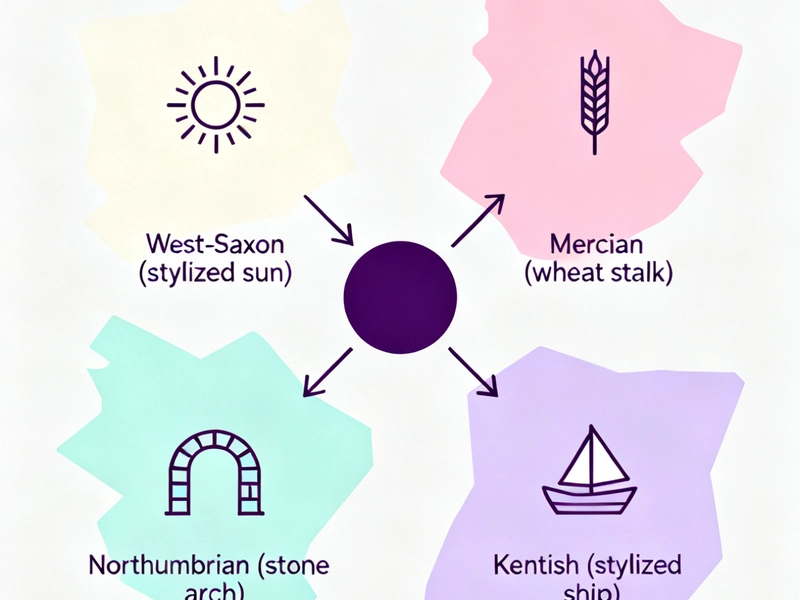
Dialect, manuscript date, scribal practice, and modern editorial normalization can all change spelling. The page has no dialect selector, so its answer should not be read as a documented West Saxon, Mercian, Northumbrian, or Kentish form.
Old English Is Not Archaic Modern English
Adding thou, thee, or decorative endings is not the same as using Old English. Old English has inflectional patterns and vocabulary that differ substantially from later Middle English and Early Modern English.
Runes and Latin-Script Texts Need Separate Questions
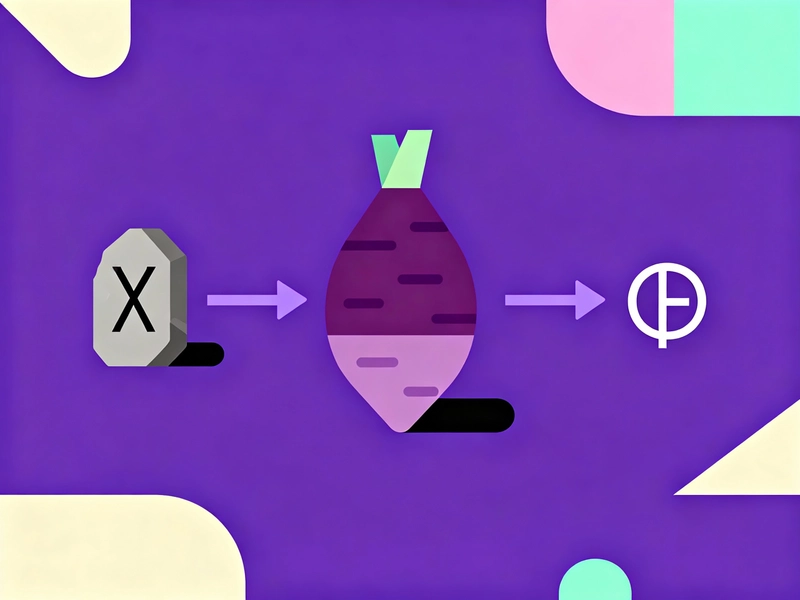
Some early English survives in runic inscriptions, while much of the literary record is transmitted in Latin-script manuscripts. This page generates text; it does not identify an inscription, date an object, or convert an image into a reading.
An Edition Supplies Missing Evidence
A critical edition records a work's manuscript basis and editorial decisions. Use one when a phrase comes from Beowulf, a charter, a homily, or another source instead of citing a generated reconstruction.
What the Current Old English Page Actually Does
A concise account of the implemented browser and server path.
Text Request with a Visible Limit
The text-only browser form stops input over 500 characters. It sends accepted text to /api/gemini, which enters a queued compatibility layer backed by DeepSeek and returns an AI-generated working draft.
Manual Two-Way Prompt
The direction button swaps Modern English and Old English labels and changes the prompt sent with the request. There is no automatic dialect identification.
Account-Metered Requests
Translation requests require a signed-in account. Five requests are available in the daily allowance, and subsequent requests consume one translation credit apiece.
Draft Controls, Not Research Apparatus
The result panel supports copy and reset. It does not provide a dialect selector, manuscript citation, morphological analysis, or an image-reading control.
Questions to Ask Before Using an Old English Draft
Treat uncertainty as part of the historical-language workflow.
Explore More Translator Tools
Check out these related translation and AI tools to enhance your experience
A Three-Step Old English Review Routine
Use the generator as the beginning of a historical-language check, not the end of one.
Step 1: Choose the Direction Yourself
Use the arrow to select Modern English to Old English or the reverse. The page does not infer a historical stage or manuscript dialect for you.
Step 2: Request a Bounded Draft
The browser form accepts up to 500 characters. A signed-in account has five daily translation requests; after those, one translation credit is used for each later request.
Step 3: Check Forms in Context
Confirm each lemma, ending, and construction in a dictionary, grammar, and edited text before copying the result into research, teaching material, or creative work.
Create a Short Old English Working Version
Enter one bounded passage, choose the direction, and plan a source-based review before using the wording elsewhere.