Hindi Transliteration Converter: Convert English to Devanagari Easily
Type Romanized Hindi to produce a Devanagari draft, or reverse the direction to romanize Devanagari. Spelling choices can vary, so review names, dialect words, and formal text carefully.
Romanized Hindi
0 / 500
Devanagari Hindi
Translation will appear here...
Real Examples of Hindi Transliteration Converter in Action
See representative drafts for everyday phrases. These six examples cover greetings, travel, learning, landmarks, and work; actual output may differ because Hindi wording and romanization are context-dependent.
English
Namaste, aap kaise hain?
Translation
नमस्ते, आप कैसे हैं?
Daily greeting and well wishes
English
Mujhe ek cup chai chahiye, kripaya.
Translation
मुझे एक कप चाय चाहिए, कृपया।
Ordering food and drink at a café
English
Nazdeeki aspataal kahaan hai?
Translation
निकटतम अस्पताल कहाँ है?
Asking for directions in an emergency
English
Mujhe nai bhashaein seekhna pasand hai.
Translation
मुझे नई भाषाएँ सीखना पसंद है।
Expressing personal interest and hobbies
English
Taj Mahal Agra mein hai.
Translation
ताजमहल आगरा में है।
Talking about famous Indian landmarks
English
Kripaya mujhe invoice email se bhejein.
Translation
कृपया मुझे चालान ईमेल द्वारा भेजें।
Professional business communication
Fun Facts About Hindi Script and Transliteration
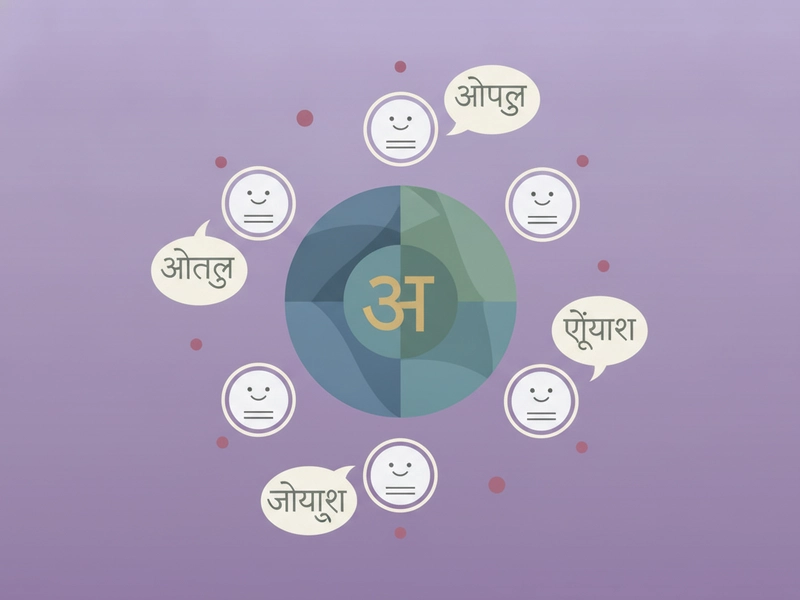
Devanagari Supports Several Languages
Devanagari is used to write Hindi, Marathi, Nepali, Sanskrit, and several other languages. The script runs from left to right, and many letters share a visible top line. Readers may recognize the same characters across languages even when vocabulary, pronunciation, and spelling conventions differ, which makes script knowledge useful beyond Hindi alone.
Romanization Is Not One Fixed Spelling
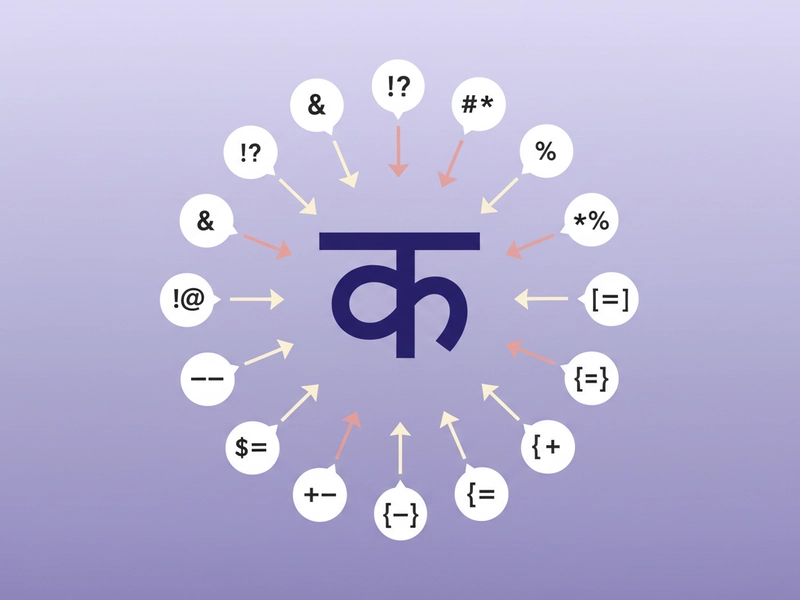
Hindi romanization can be informal, pronunciation-based, or tied to a formal scholarly scheme. Long vowels, aspiration, and retroflex consonants may therefore appear in more than one Latin spelling. A converter has to interpret context rather than substitute characters mechanically, and names or dialect words often need extra review after the first draft.
Hindi Transliteration Reference Tables
| Roman Input | Devanagari | Example Word |
|---|---|---|
| a | अ | अनार (pomegranate) |
| aa / A | आ | आम (mango) |
| i | इ | इमली (tamarind) |
| ii / I | ई | ईख (sugarcane) |
| u | उ | उल्लू (owl) |
| uu / U | ऊ | ऊन (wool) |
| e | ए | एक (one) |
| o | ओ | ओखली (mortar) |
| ka | क | कमल (lotus) |
| kha | ख | खरगोश (rabbit) |
Standard Hindi Transliteration Mapping (ITRANS)
This table lists the most common Roman-to-Devanagari mapping used in the ITRANS transliteration scheme. It covers vowels, consonants, frequently used conjuncts, and common diacritical marks. Use it as a quick reference guide when typing unfamiliar Hindi characters in digital contexts, such as chat or email.
Ambiguous Pair Guide (Common Confusions)
Certain Roman letters or sequences can map to multiple Devanagari characters because of similar sounds. This table helps you distinguish between these ambiguous mappings using pronunciation tips and example words. For instance, 'sha' can represent both श and ष.
| Roman Variation | Dev1 | Dev2 | Tip |
|---|---|---|---|
| d vs. ḍ | द (dental) | ड (retroflex) | Touch tongue to teeth for द; curl back for ड |
| t vs. ṭ | त (dental) | ट (retroflex) | Same tongue position difference as d/ḍ |
| sh vs. ṣ | श (palatal) | ष (retroflex) | श is like English 'sh'; ष is harder, with curled tongue |
| n vs. ṇ | न (dental) | ण (retroflex) | न touches teeth; ण uses the roof of the mouth |
| r vs. ṛ | र (flap) | ड़ (retroflex flap) | ड़ is a brief flap like in 'butter' (American) |
| ch vs. chh | च (unaspirated) | छ (aspirated) | Add a puff of air for छ as in 'chai' but stronger |
Discover More About Hindi Language and Culture
The Ancient Roots of Hindi
Hindi evolved from Sanskrit through the Middle Indo-Aryan languages known as Prakrits and Apabhramsha over millennia. It belongs to the Indo-Aryan branch of Indo-European. Modern Standard Hindi, standardized in the 19th century, draws heavily from Sanskrit for formal vocabulary but also incorporates Persian, Arabic, and English loanwords, reflecting centuries of trade, rule, and cultural exchange across India.
Cultural Significance of Devanagari Script
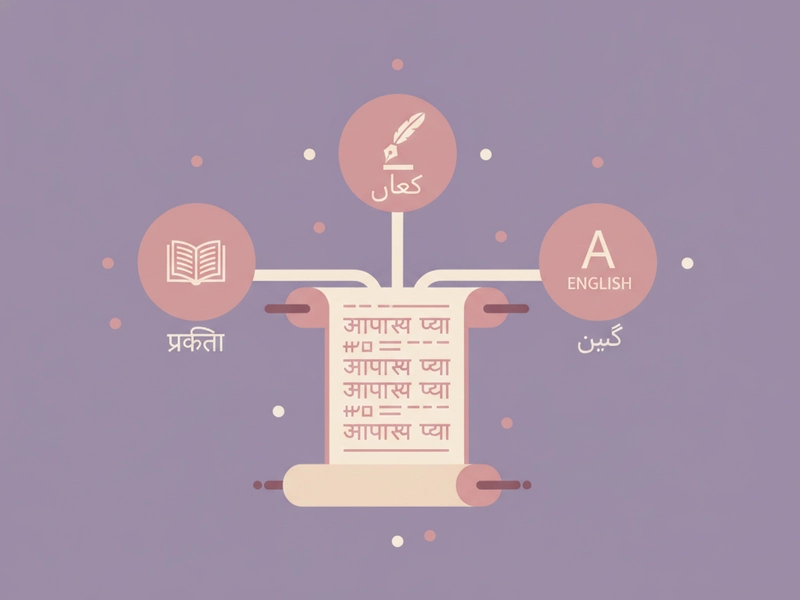
Devanagari is used for Hindi, Sanskrit, Marathi, Nepali, and other languages. It is written left to right, and many letters are joined visually by a horizontal headline often called the shirorekha. The script appears in literature, newspapers, signage, education, and religious texts, but each language applies its own vocabulary and orthographic conventions in different social settings.
Hindi and Its Language Continuum
Standard Hindi developed from Khari Boli, while northern India also has related varieties with their own identities and literary traditions. Braj, Awadhi, and Bhojpuri may be grouped differently depending on linguistic, cultural, or census context. Their pronunciation, grammar, and vocabulary can differ substantially, so a romanized form that looks familiar in one community may be read differently in another.
Interesting Linguistic Features of Hindi
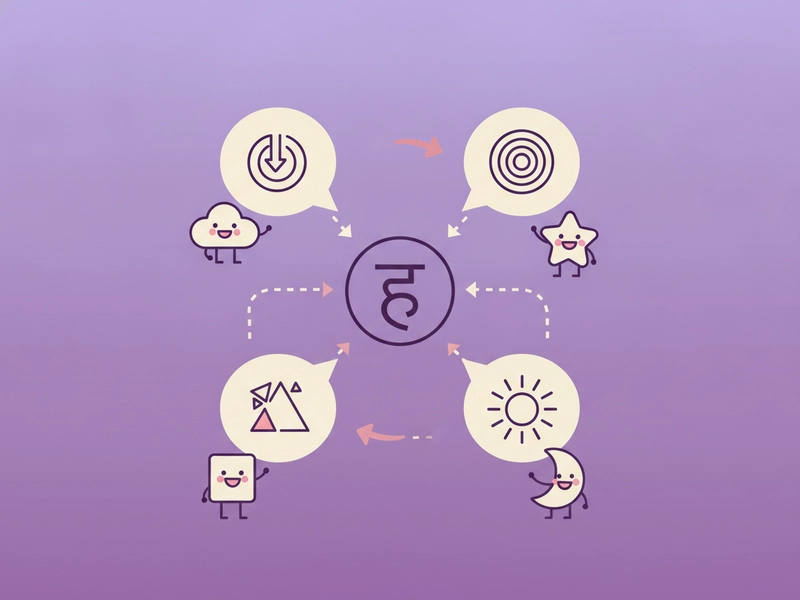
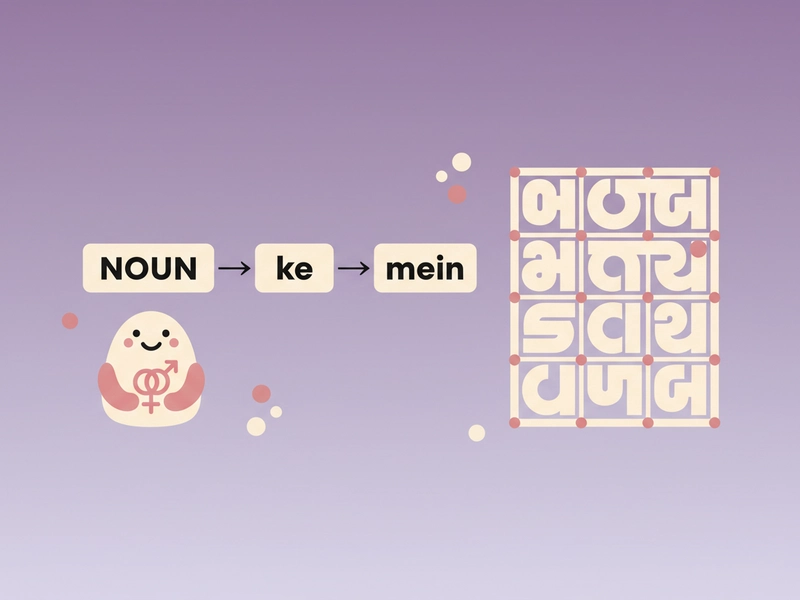
Hindi commonly uses postpositions after nouns rather than English-style prepositions before them. Nouns are generally treated as masculine or feminine, and that distinction can affect nearby adjectives and verb forms. Devanagari also combines consonants into conjunct forms, so visually reading a word involves more than matching one Latin letter to one separate symbol in context.
Key Features of the Hindi Transliteration Converter
Two-Panel Workflow
The interface keeps Romanized Hindi or Devanagari in the left panel and the generated script in the right panel. This side-by-side layout supports direct comparison, helping you notice omitted sounds, changed names, and ambiguous spellings before copying the draft.
Direction Control When Supported
Use the direction control to switch between Romanized Hindi to Devanagari and Devanagari to Roman text. This supports comparison in both scripts, but it does not turn transliteration into a word-for-word English translation. Check the direction label before submitting so the output matches the script you need.
Copyable Text Output
Once the Devanagari text appears, you can copy it with a single click on the copy icon. The output is plain Unicode text, ready to paste into any document, email, or social media platform without formatting issues. It works on both desktop and mobile browsers.
Clearly Labeled AI Draft
The conversion result is treated as an AI-generated draft rather than a certified application of one romanization scheme. Review names, dialect words, vowel choices, and formal text against a trusted reference before using the output in important documents.
Frequently Asked Questions
Have other questions? Feel free to contact us via email.
Explore More Translator Tools
Check out these related translation and AI tools to enhance your experience
How to use hindi transliteration converter
Follow these three simple steps to convert English text into Devanagari Hindi using our transliteration tool.
Step 1: Enter Text
Type or paste Romanized Hindi into the input box, or switch direction and enter Devanagari. Keep the text within the displayed character limit, and include enough context to resolve ambiguous spellings.
Step 2: Translate
Click the Translate button to request a conversion draft. The selected direction tells the tool whether to produce Devanagari or Roman text. Wait for the result instead of submitting the same request repeatedly.
Step 3: Copy and Use
Compare the generated script with your source, checking names and ambiguous spellings. Use the copy action when ready, but review the draft carefully before placing it in an important message or document.
Start Using GuruTrans Hindi Transliteration Converter Now
Convert short Romanized Hindi and Devanagari drafts in either direction, then review the chosen spelling and script before copying the result.