Draft Jamaican Patois Without Hiding Its Variation
Use the two-way text form for an initial wording, not as a single final answer for every Jamaican speaker, setting, or writing convention.
English
0 / 500
Jamaican Patois
A Jamaican Patois draft will appear here...
Six Illustrative Jamaican Patois Pairs
The spellings below are cautious editorial examples, not promised provider output or a universal house style. Ask which orthography and register your project requires.
English
Hello, how are you?
Translation
Wah gwaan, how yuh deh?
Informal greeting in a commonly seen spelling
English
I am going.
Translation
Mi a go.
Progressive or prospective construction example
English
I do not know.
Translation
Mi nuh know.
Negative statement in a common informal spelling
English
This is my book.
Translation
Dis a mi buk.
Possessive phrase illustration
English
They are coming.
Translation
Dem a come.
Plural pronoun and aspect marker illustration
English
See you later.
Translation
Likkle more.
Informal leave-taking expression
A Small Jamaican Patois Review Kit
| Cue | Possible Role | Review Question |
|---|---|---|
| mi | First-person pronoun or possessive | Does its role fit the sentence? |
| dem | Plural pronoun or plural marker | Which noun or people does it refer to? |
| a | Copular, focus, or aspect-related function | What construction is intended here? |
| nuh / no | Negative form in differing spellings | Which orthography is the project using? |
Common Grammar Cues to Inspect
These cues help organize a review; they are not a word-replacement recipe.
Context Note for Every Draft
Attach a brief note so a reviewer can judge the intended voice rather than guessing from one isolated line.
| Field | Record | Reason |
|---|---|---|
| Audience | Who will read or hear it | Register depends on relationship |
| Setting | Conversation, caption, dialogue, or study note | Medium affects wording |
| Orthography | Cassidy-JLU or another stated convention | Prevents silent spelling drift |
| Reviewer | Person and context checked | Makes human feedback traceable |
Contexts That Change Jamaican Patois Wording
Conversation and Code-Switching
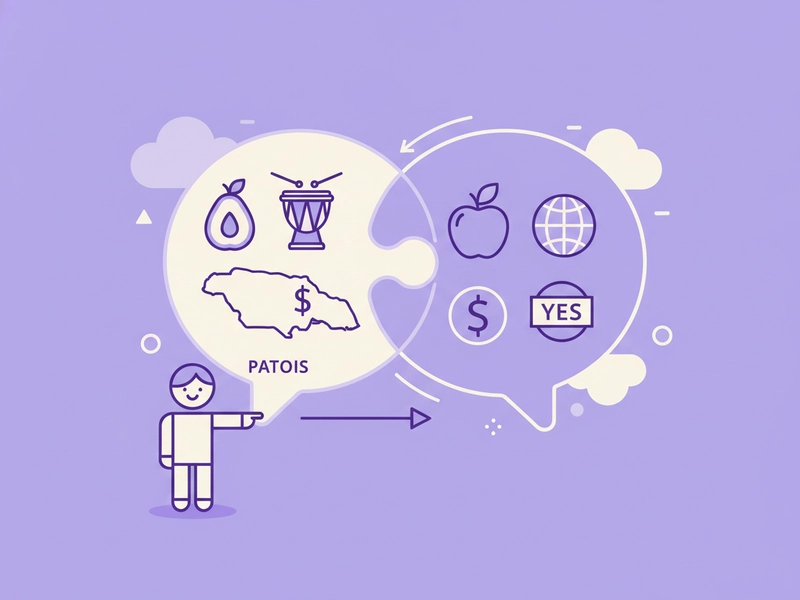
Jamaican speakers may move among Creole and English features in the same interaction. Preserve deliberate code-switching instead of forcing every word toward one end of the continuum.
Spelling, Speaker, and Setting
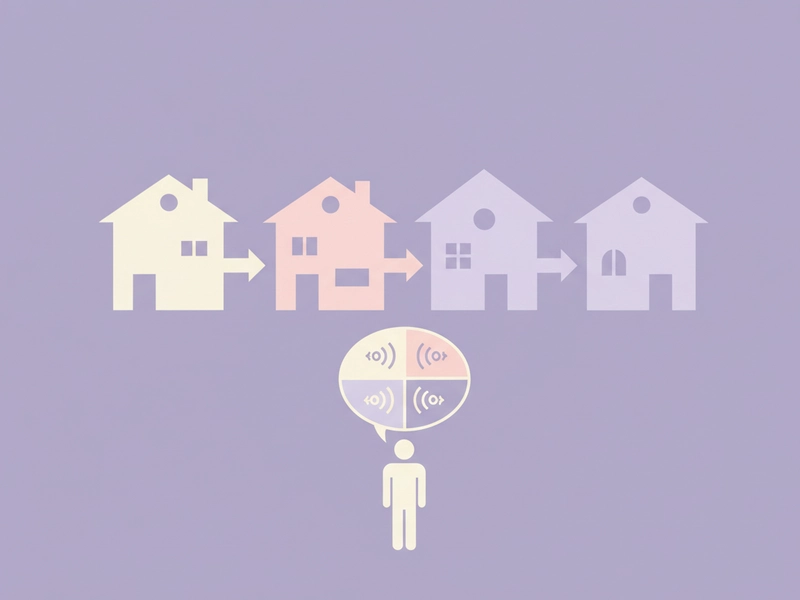
Spelling, speaker choices, and context vary across communities and situations. Ask whether the reader expects Cassidy-JLU forms, familiar social-media spellings, dialogue-like eye spelling, or another documented editorial policy.
Dialogue Needs More Than Substitution
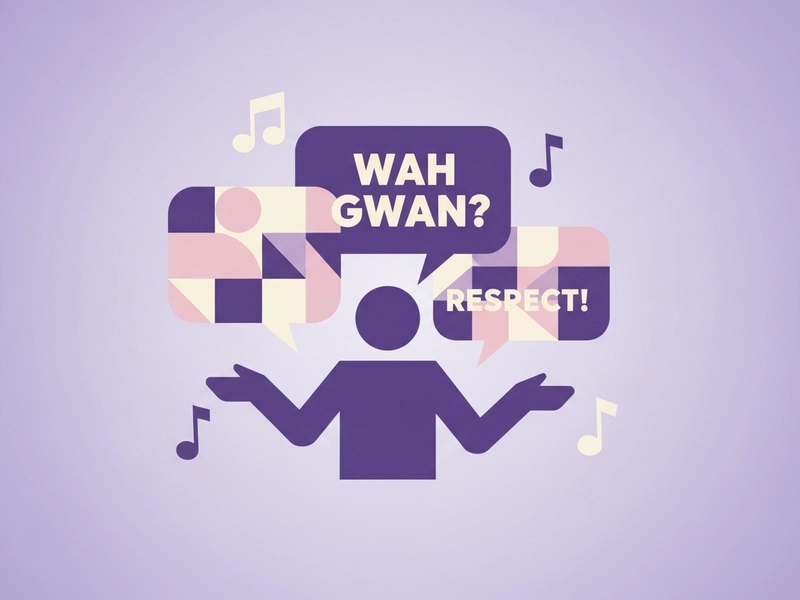
Character voice includes relationship, age, region, topic, and stance. A generated string can suggest wording, but a Jamaican reader should check whether the dialogue sounds respectful and plausible for that character.

Music and Quoted Speech Need Source Care
Do not replace an artist's or speaker's actual words with a generated paraphrase. When discussing a recording or interview, work from an identified source and distinguish quotation from your own translation.
Implemented Patois Tool Boundaries
The current page is a small text workflow with account metering.
Two Prompt Directions
Manual direction changes whether the shared request asks for English-to-Jamaican-Patois wording or a Standard English interpretation of Jamaican Patois.
Queued Provider Request
Accepted text is posted to /api/gemini. The shared server route applies account access and passes the prompt through a queue to the DeepSeek adapter, which returns an AI-generated first draft.
Text Field, Not a Media Importer
The visible interface has no file control and does not accept document or voice uploads. Paste or type a passage within the browser's character limit.
Simple Result Actions
Copy moves the displayed draft to the clipboard, while reset clears both panels and returns the direction to English-first. Neither action validates dialect or spelling.
Questions About Jamaican Patois Drafts
Decide on audience, orthography, and evidence before publishing.
Explore More Translator Tools
Check out these related translation and AI tools to enhance your experience
From Short Input to Reviewed Jamaican Wording
A useful result depends on audience and situation, not only on replacing words.
Step 1: Set a Manual Direction
Choose English to Jamaican Patois or the reverse with the direction button. The tool does not identify a speaker's variety or preferred spelling system.
Step 2: Send One Short Passage
The text-only field accepts up to 500 characters. An account receives five daily translation requests; each later request uses one credit.
Step 3: Review for People and Place
Compare the draft with your chosen orthography, the surrounding conversation, and feedback from a Jamaican speaker who understands the intended audience.
Start with One Short Jamaican Patois Draft
Choose a direction, enter a bounded passage, and keep space in the workflow for orthography and community review.