Medical Jargon Translator for Question Preparation
Keep the original wording beside an AI-generated explanation, then confirm it with the clinician, pharmacist, or laboratory responsible for the information. Urgent symptoms require local emergency services, not this tool.
For explanation and education only; this is not medical advice, a diagnosis, or treatment guidance. Confirm results, medicines, and urgent symptoms with a qualified healthcare professional.
Medical Jargon
0 / 500
Plain English
An educational AI explanation will appear here...
Illustrative Medical-Term Explanations
These pairs show cautious explanations rather than instructions. Abbreviations and findings can be ambiguous outside their record, so each example preserves a reason to confirm the meaning with the responsible healthcare professional.
English
Take this medicine BID with food.
Translation
Possible explanation: BID often means twice daily, but do not change or follow a dose from this draft. Confirm the exact medicine instructions with the dispensing pharmacist or prescriber.
Prescription instruction translation
English
The patient had a myocardial infarction.
Translation
Possible explanation: myocardial infarction commonly refers to heart-muscle injury caused by interrupted blood flow, often called a heart attack. The record's timing, certainty, severity, and treatment need clinical explanation.
Diagnosis translation for heart attack
English
Stat! We need the crash cart now.
Translation
Possible explanation: stat commonly signals immediate priority in a clinical setting, and crash cart refers to emergency equipment. Follow the care team's directions rather than using this draft to assess urgency.
Emergency term translation
English
The biopsy showed a benign tumor.
Translation
Possible explanation: benign commonly means noncancerous, but it does not automatically mean harmless or that no follow-up is needed. Ask the clinician what this result means in this specific biopsy.
Reassuring test result translation
English
NPO after midnight before surgery.
Translation
Possible explanation: NPO commonly means nothing by mouth. Confirm the exact start time and whether water, medicines, or other exceptions apply with the surgical team before the procedure.
Pre-surgery fasting instruction
English
Patient is SOB and needs oxygen.
Translation
Possible explanation: SOB may mean shortness of breath in a clinical note, but abbreviations can be ambiguous. The need for oxygen and the cause require assessment by the treating team.
Symptom abbreviation translation
Fun Facts About Medical Terminology
Stat Has a Latin Source, but Context Controls
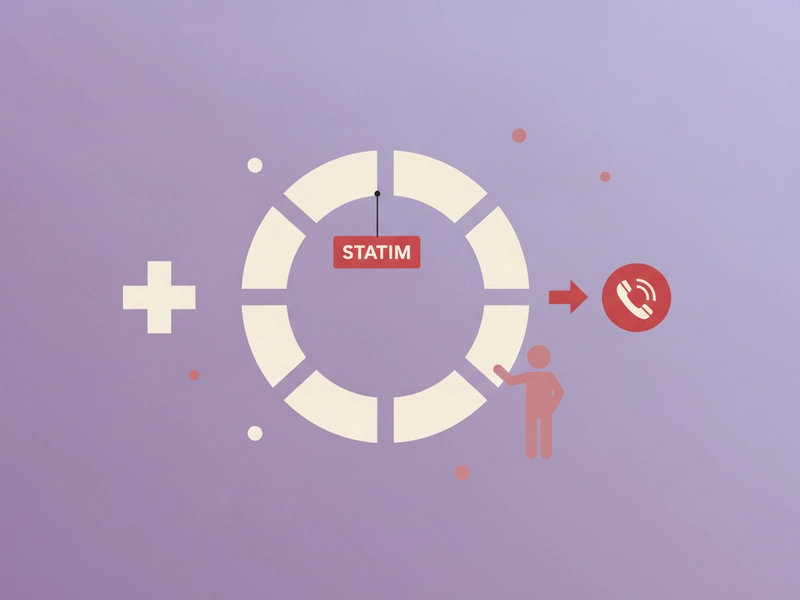
In clinical settings, stat commonly signals immediate priority and is associated with the Latin statim. That historical note does not tell a patient what action to take, how urgent a personal situation is, or whether a copied phrase is current. Follow instructions from the treating team and use emergency services when urgent symptoms occur.
Word Origins Do Not Define a Diagnosis
Medical terms often have Greek or Latin histories, but modern diagnostic criteria come from current clinical practice, tests, and professional standards rather than etymology. A memorable origin story can omit subtypes, uncertainty, and changing knowledge. Treat word history as language context only, never as a way to diagnose yourself or another person.

Medical Abbreviation Review Tables
| Abbreviation | Possible Expansion | Do Not Assume | Confirm With | |
|---|---|---|---|---|
| BID | bis in die | Often twice daily | Exact timing or dose | Pharmacist or prescriber |
| TID | ter in die | Often three times daily | Exact spacing or dose | Pharmacist or prescriber |
| QID | quater in die | Often four times daily | Exact spacing or dose | Pharmacist or prescriber |
| PRN | pro re nata | Often as needed | Reason, maximum, or interval | Pharmacist or prescriber |
| QD | quaque die | Historically used for daily | Current instruction or timing | Pharmacist or prescriber |
| PO | per os | Often by mouth | Form, dose, or swallowing safety | Pharmacist or prescriber |
| IM | intramuscular | Often intramuscular | Medicine, site, or technique | Qualified healthcare professional |
Medication Abbreviations to Confirm
These are possible expansions, not dosing instructions. Handwriting, local conventions, and missing medicine details can change or obscure meaning. If any abbreviation appears on a label, prescription, discharge note, or message, confirm the full instruction with the dispensing pharmacist or prescriber before taking medicine.
Laboratory Abbreviations to Place in Context
A likely expansion does not interpret a result. Laboratories use method-specific units, flags, and reference intervals, while age, sex, pregnancy, fasting, medicines, and clinical context may matter. Read the actual report and ask the ordering clinician or laboratory about your result.
| Abbreviation | Possible Full Name | General Topic | Confirm |
|---|---|---|---|
| HDL | High-Density Lipoprotein | A lipoprotein measurement | Units, interval, and clinical meaning |
| LDL | Low-Density Lipoprotein | A lipoprotein measurement | Units, target, and clinical context |
| HbA1c | Hemoglobin A1c | A longer-term glucose-related marker | Method, units, conditions, and interpretation |
| WBC | White Blood Cell count | A blood-cell count | Units, differential, interval, and symptoms |
| RBC | Red Blood Cell count | A blood-cell count | Units, interval, and related indices |
| BUN | Blood Urea Nitrogen | A nitrogen-related blood measurement | Units, hydration, kidney context, and interval |
| AST | Aspartate Aminotransferase | An enzyme measurement | Units, interval, other tests, and symptoms |
Discover More About Medical Terminology Language
Word Parts Can Guide Better Questions
Prefixes, roots, and suffixes can offer clues about a medical term, but a clue is not a diagnosis or a complete interpretation. The same word part may appear in different specialties and contexts. Use it to form a question, then ask the clinician, pharmacist, laboratory, or report author what the full term means in this specific record.

A Plain Explanation Still Needs Clinical Context
A familiar synonym can make a term easier to read without explaining severity, certainty, cause, timing, or the clinician's next step. Notes may record a possibility, rule-out diagnosis, history, or confirmed finding. Keep qualifiers and negation visible, and use the explanation to prepare questions rather than deciding what a result means or what treatment to follow.

Terminology Varies Across Health Systems
Drug names, professional titles, abbreviations, units, reference intervals, and documentation conventions can vary by country, health system, specialty, and facility. A short excerpt may not reveal which convention applies. Preserve the original spelling and units, identify the source organization, and confirm unfamiliar wording with the clinician, pharmacist, or laboratory responsible for the information before acting on it.

Medication Instructions Require Direct Confirmation
An abbreviation can be ambiguous, outdated, locally defined, or misread when separated from the medicine name, strength, route, frequency, and prescriber's directions. Never calculate, start, stop, or change a dose from an AI explanation. If any label or instruction is unclear at all, contact the dispensing pharmacist or prescribing clinician before taking or changing the medicine.

Medical Jargon Explainer Review Features
Two-Panel Workflow
The source remains on the left while the proposed explanation appears on the right. Side-by-side review helps reveal omitted qualifiers, units, negation, uncertainty, and timing during careful review, but it cannot validate the clinical interpretation.
One-Way Explanation Only
This profile only explains medical jargon in plain English. It does not turn a person's description into clinical terminology, draft a chart note, assign a diagnosis, or let the browser submit an arbitrary system instruction.
Copyable Text Output
The output is copyable plain text for preparing questions. Keep it separate from the medical record, do not use it to alter instructions, and remember that copied text does not preserve every layout cue or report relationship.
Clearly Labeled AI Draft
A persistent warning states that the output is educational, not diagnosis or treatment advice. Medication, symptoms, test results, follow-up, pregnancy, allergies, and urgent concerns require confirmation without delay from an appropriate healthcare professional or emergency service.
Frequently Asked Questions
Understand the limits before using any generated explanation.
Explore More Translator Tools
Check out these related translation and AI tools to enhance your experience
How to Use the Medical Jargon Explainer
Use one short, de-identified passage at a time and turn the output into questions for the responsible clinician, pharmacist, or laboratory.
Step 1: Enter Text
Paste a short passage within the displayed 500-character limit. Remove names, record numbers, dates of birth, contact details, and other personal health information before sending text to an online AI service.
Step 2: Translate
Select Explain to request a one-way draft. Compare it with the source and check whether negation, uncertainty, timing, units, medication details, abnormal flags, and follow-up instructions remain visible rather than being simplified away.
Step 3: Copy and Use
Copy the result only as a question-preparation note. Confirm diagnoses, results, doses, interactions, allergies, treatment, follow-up, and urgency with a qualified healthcare professional before making any health decision or taking action.
Prepare Questions About a Short Medical Passage
Use the draft to identify terms and questions, then confirm them with the responsible clinician, pharmacist, or laboratory. For urgent symptoms or emergencies, contact local emergency services immediately.