Base64 Encoder Decoder with Two-Way Review
Choose text-to-Base64 or Base64-to-text and compare both panels. Base64 is encoding, not encryption, and an AI draft can be wrong even when the underlying conversion is deterministic.
Text
0 / 500
Base64
The AI conversion draft will appear here...
Base64 Encoder Decoder Examples – See It in Action
These standard UTF-8 examples provide test vectors for review. Verify them with a deterministic implementation, and do not assume that merely encoding a URL, identifier, HTML snippet, or sensitive value makes it safe or secret.
English
Hello, how are you today?
Translation
SGVsbG8sIGhvdyBhcmUgeW91IHRvZGF5Pw==
Everyday greeting encoded to Base64
English
Base64 encoding makes data portable.
Translation
QmFzZTY0IGVuY29kaW5nIG1ha2VzIGRhdGEgcG9ydGFibGUu
Short sentence about Base64 portability
English
https://www.example.com/path?query=test
Translation
aHR0cHM6Ly93d3cuZXhhbXBsZS5jb20vcGF0aD9xdWVyeT10ZXN0
URL encoded to Base64 for safe transport
English
12345-abcdef-67890
Translation
MTIzNDUtYWJjZGVmLTY3ODkw
Alphanumeric ID encoded to Base64
English
The quick brown fox jumps over the lazy dog.
Translation
VGhlIHF1aWNrIGJyb3duIGZveCBqdW1wcyBvdmVyIHRoZSBsYXp5IGRvZy4=
Famous pangram encoded to Base64
English
<b>Bold text</b>
Translation
PGI+Qm9sZCB0ZXh0PC9iPg==
HTML snippet encoded to Base64
Fun Facts About Base64
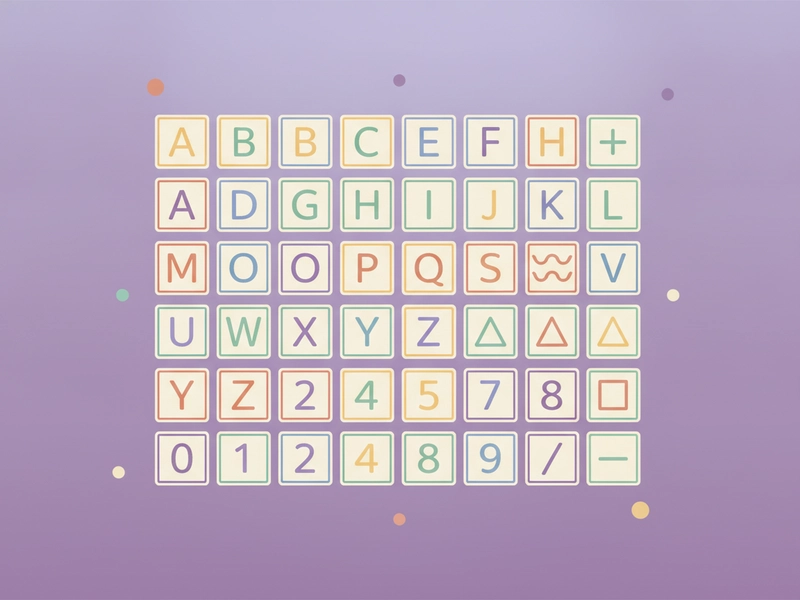
64 Characters – That's All It Needs
The standard alphabet contains A–Z, a–z, 0–9, plus + and /. Four encoded characters represent each complete group of three input bytes. Printable output helps bytes travel through text-oriented formats, but it is not automatically valid in every URL, header, filename, or protocol without the correct variant and surrounding escaping rules.
Base64 Became Familiar Through Internet Mail
Privacy-Enhanced Mail specifications used a Base64-style printable encoding before MIME documented Base64 as a content-transfer encoding in RFC 2045. Email transport constraints helped make the notation familiar, but Base64 was one part of a larger standards history involving message structure, character sets, transfer rules, and compatible implementations rather than a single invention event.

Base64 Encoding – Reference Tables You Can Use
| Value (0-63) | Character | Binary (6 bits) |
|---|---|---|
| 0 | A | 000000 |
| 1 | B | 000001 |
| 2 | C | 000010 |
| 3 | D | 000011 |
| 4 | E | 000100 |
| 5 | F | 000101 |
| 6 | G | 000110 |
| 7 | H | 000111 |
Base64 Standard Index Table
This table maps every 6‑bit binary value (0–63) to its corresponding Base64 character. It's handy when you want to manually encode or decode small pieces of data, or simply understand how the algorithm works under the hood.
Base64 Padding Rules Explained
For standard padded Base64, the final encoded length is a multiple of four. This table describes one incomplete three-byte group, separating data characters from = signs. Variant specifications may omit padding, so apply the rule required by the actual format.
| Input Bytes | Data Characters Before Padding | Padding '=' Count |
|---|---|---|
| 1 | 2 | 2 |
| 2 | 3 | 1 |
| 3 | 4 | 0 |
Discover More About Base64 Encoding
History and Birth of Base64
Internet specifications developed printable encodings so byte sequences could pass through systems designed around restricted text. Privacy-Enhanced Mail described an earlier form, and MIME's RFC 2045 documented Base64 as a content-transfer encoding. Modern RFC 4648 defines common Base-N alphabets and rules. Always follow the specification used by the actual container rather than mixing those contexts.

Common Variants and Their Uses
Standard Base64 uses + and /, while the URL- and filename-safe alphabet substitutes - and _. MIME transfer encoding also has line-wrapping requirements that do not belong in an ordinary RFC 4648 value. Padding rules can vary by specification. This page requests only standard padded Base64, so convert other variants with a tool designed for the destination format only.

Padding Rules – Why the '=' Signs?
Standard Base64 groups three input bytes into four six-bit indexes. A final group with two bytes produces three data characters and one =; a group with one byte produces two data characters and two = signs. Some variant specifications omit padding, but this profile requests standard padded output and should reject malformed input instead of silently repairing it.

Real‑World Use Cases Beyond Email
Base64 appears in MIME bodies, PEM-style textual containers, data URLs, API fields, and other specifications that need printable representations of bytes. Each container defines its own line breaks, prefixes, accepted alphabet, padding, and security requirements. Base64 does not validate content, hide secrets, prevent injection, or replace encryption, authentication, or documented destination-specific parsing and validation rules.

Base64 Encoder Decoder Review Features
Two-Panel Workflow
The input stays on the left while the AI-generated Base64 or decoded text appears on the right after submission. The split view supports careful manual comparison, but exact byte verification still requires a deterministic codec.
Direction Control
Switch explicitly between UTF-8 text encoding and standard Base64 decoding. The source and target labels change with the selected direction. The page does not auto-detect intent, silently repair input, or select URL-safe and MIME variants on the user's behalf.
Copyable Text Output
Copy the reviewed plain-text result from the output panel after independent verification. Before manually pasting it into another system, confirm that system's alphabet, padding, whitespace, encoding, maximum length, and validation requirements for the exact field.
AI Draft – Review Before Use
The page uses an AI model for a deterministic conversion task, so output can still vary or be wrong. Verify it against a local RFC 4648 implementation before critical tests, production, or any security-sensitive work.
Frequently Asked Questions
Check the alphabet, variant, bytes, and padding before use.
Explore More Translator Tools
Check out these related translation and AI tools to enhance your experience
How to use base64 encoder decoder
Choose the direction explicitly, submit a short value, and verify the AI-generated draft with a deterministic RFC 4648 implementation.
Step 1: Enter Text
Enter UTF-8 text or a standard Base64 string within the 500-character limit. Select the direction yourself; the page does not auto-detect intent, upload files, or infer a binary data format.
Step 2: Translate
Choose text-to-Base64 or Base64-to-text, then select Convert. The server requests only standard RFC 4648 output; it does not provide URL-safe mode, automatic padding repair, or any size-comparison feature in this interface.
Step 3: Copy and Use
Copy the result after comparing it with a trusted local codec. Check UTF-8 bytes, padding, forbidden whitespace, variant requirements, and the destination specification before placing the value in any system.
Compare UTF-8 Text and Standard Base64
Request a short conversion draft, then verify it with a deterministic RFC 4648 implementation before using it in code, tests, messages, files, APIs, or security-sensitive systems.