Shakespearean Translator for Creative Drafts
This text-only browser form accepts up to 500 characters. It creates a Shakespeare-inspired rewrite for dialogue, role-play, and writing exercises; it does not recover Shakespeare's original language for a sentence.
Modern English
0 / 500
Shakespearean
The style draft will appear here...
Illustrative Shakespeare-Inspired Rewrites
These pairs demonstrate the intended creative transformation. The right-hand lines are style examples written for this page; they are not quotations from a play or evidence of Early Modern English usage.
English
Hello, how are you today?
Translation
Good morrow! How dost thou fare on this fine day?
Greeting rewritten with familiar style cues
English
I love you with all my heart.
Translation
I do love thee with mine whole heart's devotion.
Affectionate line rewritten in a heightened voice
English
What time is it?
Translation
Prithee, what hour doth the clock strike?
Time question rewritten with archaic vocabulary
English
I'm very hungry right now.
Translation
Mine stomach doth cry for sustenance most urgently.
Comic hunger line in a dramatic register
English
Can you help me, please?
Translation
Wouldst thou be so kind as to lend me thine aid?
Request rewritten with second-person forms
English
That was an amazing performance!
Translation
'Twas a most wondrous spectacle of artistry!
Praise rewritten in a theatrical voice
Style Cues with Important Exceptions
| Modern Cue | Possible Form | Review Note |
|---|---|---|
| you as singular subject | thou | Can signal familiarity, intimacy, contempt, or rhetoric |
| your before a noun | thy / thine | Distribution varies; thine also appears independently |
| you as singular object | thee | Check whether the form is subject or object |
| yourself | thyself | Match the surrounding person and number |
| you as plural subject | ye | Usage overlaps and changes across texts and periods |
Second-Person Forms Are Contextual
These forms are useful review cues, not a complete grammar key. Number, syntax, intimacy, status, rhetoric, and the date of a source all affect the choice.
Common Creative Vocabulary Cues
Generated drafts often use these recognizable choices. They are not one-to-one replacements, and repeated use can make a line sound like parody rather than a coherent character voice.
| Modern Cue | Possible Rewrite | Example Draft |
|---|---|---|
| hello | good morrow | Good morrow, gentle friend. |
| goodbye | fare thee well | Fare thee well till we meet again. |
| please | prithee | Prithee, hear my request. |
| perhaps | perchance | Perchance the road is clear. |
| very | most | That is most welcome news. |
| yes | aye / yea | Aye, I shall attend. |
Ways to Use the Draft Without Mislabeling It
Role-Play Dialogue
Generate a starting line for a character, then adjust vocabulary and sentence length to fit that character. Tone and contextual choices can vary between requests, so keep a small voice guide for recurring scenes.
Ceremonial and Personal Writing
Use the style for a playful toast, invitation, or vow draft, but keep factual promises and names in your own words. Do not attribute generated lines to Shakespeare or present them as a historical quotation.

Games and Interactive Fiction
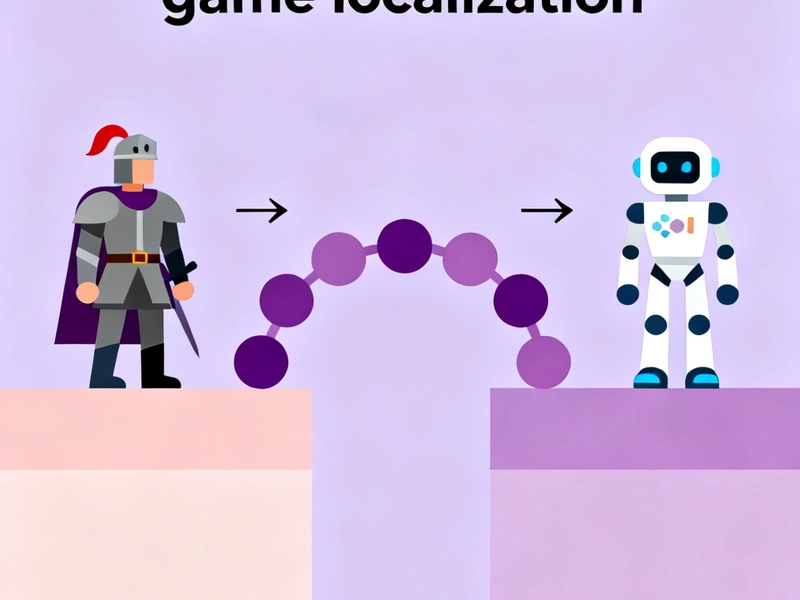
Short rewrites can help explore a voice for dialogue or item text. Build a glossary, review repeated terms across screens, and have an editor check meaning and accessibility before using the copy in a release.
Pronouns, Punctuation, and Register
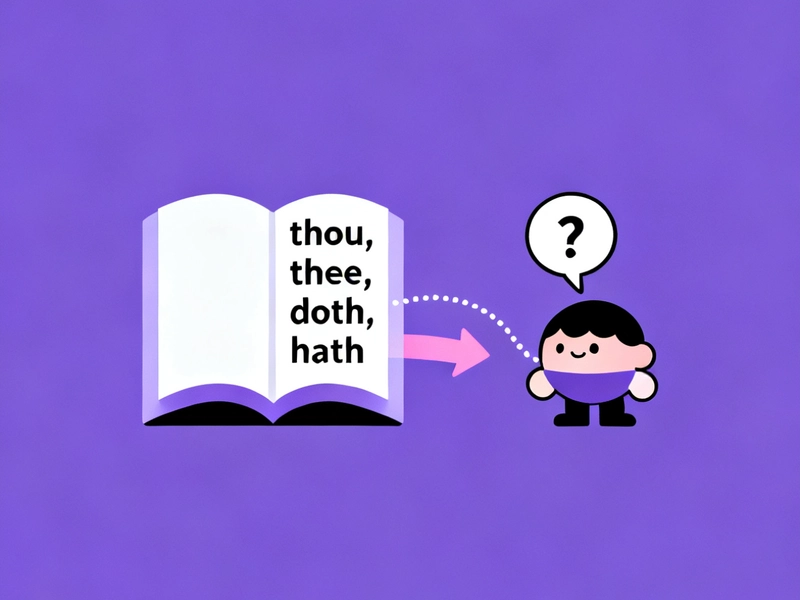
Thou, thee, thy, and thine carry grammatical and social distinctions that a style draft may flatten. Unicode punctuation can vary across fonts and editors; messaging apps may render apostrophes differently, so proofread in the destination interface.
What the Current Rewriting Flow Includes
A short, metered text request with a reversible style prompt and editable output.
Bounded Text Request
The browser form accepts one typed passage of up to 500 characters. It has no document, microphone, or sound-processing control.
Two Prompt Directions
Switch between modern English to a Shakespeare-inspired voice and stylized text back to modern wording. If an output exists, the arrow also swaps it into the input field.
Signed-In, Metered Access
A signed-in account uses five daily included requests first; after those, each request uses one translation credit. Provider failures can still interrupt a request.
Variable AI Drafts
DeepSeek generates the rewrite from the selected direction prompt. Word choice, grammar, rhythm, and interpretation may differ between inputs and require a human editorial pass.
Shakespearean Rewriter Questions
Practical answers about style, access, attribution, and editing.
Explore More Translator Tools
Check out these related translation and AI tools to enhance your experience
How to Create and Edit a Shakespeare-Inspired Rewrite
Use a short passage, choose the intended direction, and revise the AI draft for character, setting, and readability.
Step 1: Sign In and Enter Text
Use a signed-in account and paste up to 500 characters into the single text box. Keep private, regulated, or unpublished sensitive material out of the request.
Step 2: Choose the Direction
The direction switch sends either a Modern English-to-Shakespeare-inspired instruction or the reverse path back to modern wording. The /api/gemini route then submits that instruction to DeepSeek.
Step 3: Revise the Draft
Check pronouns, rhythm, tone, and intended meaning. Use Copy to move the result into your editor or Reset to begin again, then apply a human edit before publishing, performing, or quoting it.
Draft a Shakespeare-Inspired Line
Enter a short passage, choose a direction, and revise the generated wording before sharing or attributing it.