Style A-Z, a-z, and 0-9 with a Fixed Monospace Map
Enter up to 500 characters. The current browser-local function substitutes 62 configured characters one for one while leaving spaces, punctuation, and unsupported characters as entered.
English
0 / 500
Hacker Font Generator
Mathematical Monospace characters will appear here...
Six outputs from the actual 62-character table
These results are generated by the same local function used by the form. They show case, digits, separators, underscores, and an accented letter outside the configured ASCII set.
English
Hello World
Translation
𝙷𝚎𝚕𝚕𝚘 𝚆𝚘𝚛𝚕𝚍
Mixed-case greeting mapped to Mathematical Monospace characters
English
Aa Zz 09!
Translation
𝙰𝚊 𝚉𝚣 𝟶𝟿!
Boundary letters and digits mapped while punctuation remains
English
Code-42
Translation
𝙲𝚘𝚍𝚎-𝟺𝟸
Letters and numbers restyled around an unchanged hyphen
English
user_name
Translation
𝚞𝚜𝚎𝚛_𝚗𝚊𝚖𝚎
Lowercase ASCII letters mapped around an unchanged underscore
English
Café #1
Translation
𝙲𝚊𝚏é #𝟷
ASCII letters and digit mapped while accented e and hash remain
English
STATUS: OK
Translation
𝚂𝚃𝙰𝚃𝚄𝚂: 𝙾𝙺
Uppercase label mapped with its colon and space preserved
Reference groups for the configured Unicode map
| ASCII | Mapped character | Reverse result |
|---|---|---|
| A | 𝙰 | A |
| M | 𝙼 | M |
| Z | 𝚉 | Z |
| a | 𝚊 | a |
| m | 𝚖 | m |
| z | 𝚣 | z |
Letters keep their case category
Uppercase and lowercase use separate Mathematical Monospace ranges. The table below samples the boundaries and a middle pair.
Digits use their own ten-character range
Numbers are substituted independently from letters. Separators beside them are not restyled.
| ASCII digits | Mapped digits | Unchanged separators |
|---|---|---|
| 0 1 2 3 4 | 𝟶 𝟷 𝟸 𝟹 𝟺 | - _ / |
| 5 6 7 8 9 | 𝟻 𝟼 𝟽 𝟾 𝟿 | : # ! |
What survives the mapping—and what a destination may change
The configured map has no duplicate outputs
All 62 source characters use distinct Mathematical Monospace characters, so the page's reverse table has no mapping collisions inside that set. This differs from decorative maps that merge case or reuse punctuation-shaped symbols.
Unicode normalization can remove the style
Compatibility normalization such as NFKC can turn Mathematical Monospace characters back into ordinary ASCII. A platform may also filter unfamiliar characters. If a destination changes the copied string, the page cannot reverse information that is no longer present.
Font support affects appearance, not the map
The output characters remain the same even when a font draws them with different width, weight, or fallback boxes. Test the platform, font, and device that will display the text, especially in usernames and narrow fields.
Important text needs an ordinary alternative
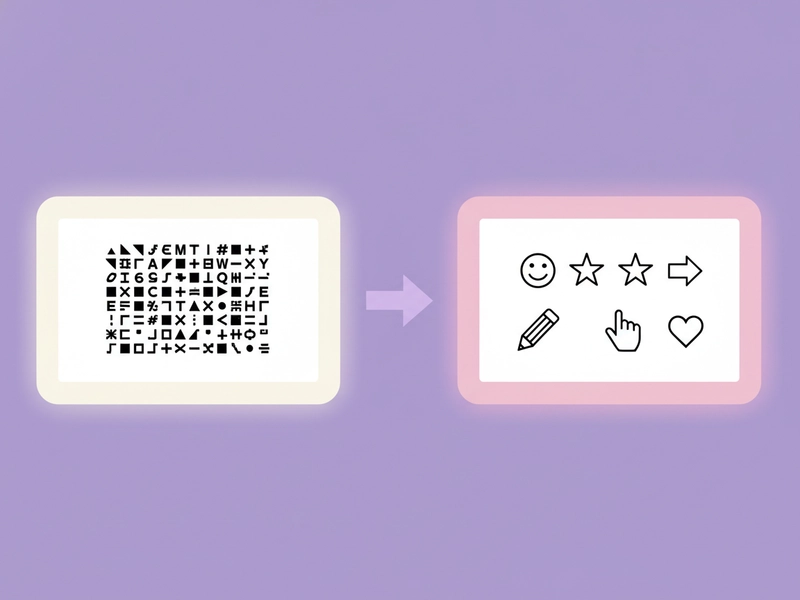
Search, spell checking, line breaking, and a screen reader may handle styled code points differently. For accessibility, keep instructions, links, account names, and required labels in normal text rather than relying on the effect.

Boundaries visible in the implementation
The generator is a character mapper with a reversible configured subset.
62 explicit source entries
The table covers A-Z, a-z, and 0-9. Each source character maps to one Mathematical Monospace code point.
Case-preserving reverse map
Uppercase, lowercase, and digit outputs are distinct. Recognized styled text therefore returns the matching ASCII character in reverse mode.
No semantic or computer operation
Words are not interpreted, and the Hacker label adds no terminal, script, credential, or network capability. The function only looks up characters.
Client controls only
The form exposes direction, Copy, and Reset around a 500-character input. It has no style picker or bundled destination font.
Questions about Mathematical Monospace output
Character coverage, reversal, and destination behavior
Explore More Translator Tools
Check out these related translation and AI tools to enhance your experience
Map, reverse, and preview the resulting characters
Keep ordinary text available wherever the styled form is optional. The visual result depends on Unicode support in the destination.
Step 1: Enter a sample within 500 characters
ASCII uppercase letters, lowercase letters, and digits have map entries. Punctuation and non-ASCII characters are unchanged because the function has no replacement for them.
Step 2: Run the local substitution
The browser-local conversion returns before the component reaches its provider branch and does not use a language model. Neither sign-in nor a translation credit is involved in this particular action.
Step 3: Reverse or export only after checking
Within the configured table, reverse mode restores case and digits because every mapped character is unique. Copy transfers the output; Reset clears both panels. If output exists, the direction arrow swaps the text panels.
Try the reversible 62-character subset
Use a short sample, inspect its destination rendering, and retain ordinary text where compatibility or accessibility matters.