English to Pashto Translator for Short Text Drafts
Create a Pashto draft from English, or reverse the direction for English output. Check right-to-left display, names, regional wording, and consequential messages before sharing.
English
0 / 500
Pashto
Translation will appear here...
English to Pashto Draft Examples
These six examples illustrate the side-by-side layout for greetings, requests, shopping, study, and thanks. Treat the Pashto lines as sample drafts rather than certified translations.
English
Hello, how are you?
Translation
سلام، څنګه یاست؟
Daily greeting
English
Please send the report by Friday.
Translation
مهرباني وکړئ راپور د جمعې تر ورځې پورې واستوئ.
Business email request
English
Good morning.
Translation
سهار مو پخیر.
Morning greeting
English
How much does this cost?
Translation
دا څومره لګښت لري؟
Shopping inquiry
English
Can you help me with Pashto homework?
Translation
آیا تاسو زما سره د پښتو کورنی کار کې مرسته کولای شئ؟
Student asking for help
English
Thank you for your hospitality.
Translation
د میلمه پالنې له امله مننه.
Expressing gratitude
Fun Facts About Pashto Language
Pashto Extends the Perso-Arabic Script
Pashto is written from right to left with a Perso-Arabic-based script adapted for sounds used in the language. Several letters distinguish sounds that Arabic or Persian spelling does not represent in the same way. Because letters join and can change visual form by position, correct Unicode order matters when copying text between websites, documents, and messaging apps.
English and Pashto Organize Sentences Differently
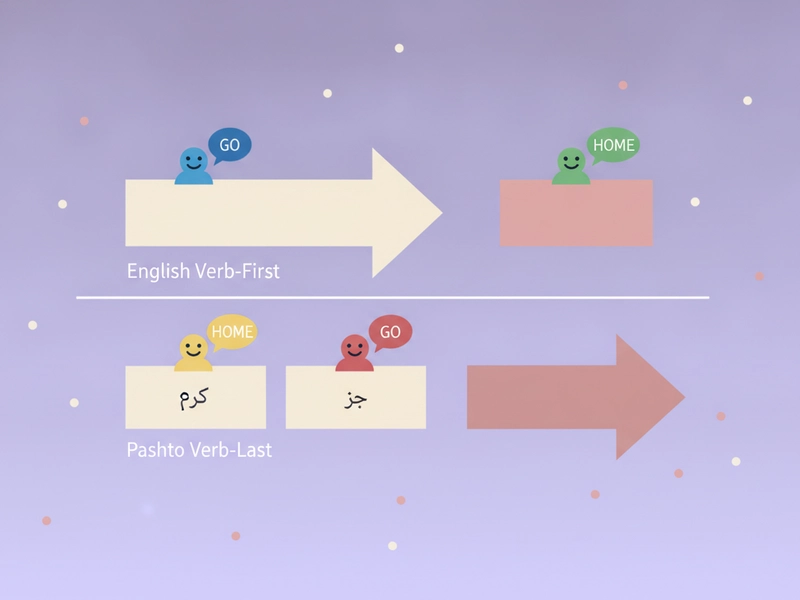
English commonly places the verb before its object, while unmarked Pashto clauses often place the verb later. Pashto also uses grammatical information that may be distributed across verbs, pronouns, and surrounding words. A fluent-looking draft can therefore preserve vocabulary yet miss who did what, making sentence-level review more useful than checking isolated words alone.
Pashto Script and Translation Review References
| Display Feature | What to Inspect | Common Risk | Review Action |
|---|---|---|---|
| Text direction | Paragraph runs right to left | Editor applies the wrong direction | Set the paragraph language or direction |
| Joined letters | Letters connect in expected positions | Copying introduces broken shaping | Check the pasted result visually |
| Numbers | Digits remain beside the intended words | Bidirectional order looks reversed | Read dates and quantities carefully |
| Punctuation | Question marks and brackets face correctly | Symbols attach to the wrong segment | Compare with a native Pashto document |
| Latin names | Email addresses and names remain readable | Direction switches inside the line | Test the final destination application |
| Line breaks | Sentences wrap without changing order | Manual breaks split joined context | Preview on desktop and mobile |
Pashto Script Display Checklist
Use this table to inspect how a Pashto draft behaves after copying it into another application. It focuses on direction, joining, punctuation, numbers, and mixed Latin text instead of offering unreliable English pronunciation shortcuts. Each row pairs a visible risk with a practical check you can perform before sending or publishing the text.
Pashto Translation Review Checklist
Run through this checklist after every generated draft. It separates language quality from visual script handling and highlights the details most likely to change meaning: audience, people, quantities, regional terms, and consequential terminology. The last column identifies when self-review is insufficient and a fluent or professionally qualified reviewer is needed.
| Review Area | Question | Why It Matters | Suggested Check | Escalate When |
|---|---|---|---|---|
| Audience | Who will read the text? | Register and regional wording vary | Name the audience in the source | A local form is required |
| Participants | Who performs each action? | Word order may obscure roles | Compare the whole sentence | The instruction affects safety |
| Names | Are names spelled consistently? | Transliteration can vary | Confirm the preferred spelling | Identity records are involved |
| Quantities | Are dates and numbers unchanged? | Mixed direction can reorder digits | Read every quantity aloud | Money or deadlines are involved |
| Terminology | Does the draft use specialist words? | General wording may choose the wrong sense | Compare a trusted glossary | Legal or medical text is involved |
| Tone | Is the level of respect appropriate? | Literal wording can sound abrupt | Ask a fluent speaker | The relationship is sensitive |
Discover More About the Pashto Language
An Eastern Iranian Literary Tradition
Pashto belongs to the Eastern Iranian branch of the Indo-Iranian language family. Its literary and oral traditions include poetry, proverbs, songs, stories, and historical writing associated with Pashtun communities across Afghanistan, Pakistan, and the diaspora. Modern translation must account for both shared written conventions and the living vocabulary people use in different regions and social settings.

Cultural Significance and Identity
Pashto is closely connected with Pashtun cultural identity and appears in family life, oral history, media, poetry, and public communication. Writers such as Khushal Khan Khattak and Rahman Baba remain important literary references. A translation may need to preserve respect, kinship language, and social tone rather than substitute dictionary meanings without considering the relationship between speakers.

Regional Variation Affects Word Choice
Pashto includes regional varieties with differences in pronunciation, vocabulary, and some grammatical patterns. Reference works group those varieties in different ways, so a simple north-versus-south label can hide local distinctions. When a translation has a known audience, state the region or preferred wording and ask a speaker from that community to review unfamiliar or sensitive expressions.
Right-to-Left Text Needs Proper Display Support
Pashto script runs from right to left, while embedded numbers or Latin names can introduce left-to-right segments. Browsers usually apply bidirectional text rules automatically, but copied text may look different in another editor. Review punctuation, number order, and joined letters after pasting, especially when a sentence mixes Pashto with email addresses, codes, or English names.
Key Highlights of GuruTrans English to Pashto Translator
Two-Panel Workflow
The source stays in the left panel while the AI-generated draft appears in the right panel. Keeping both visible makes changed names, numbers, and missing phrases easier to notice. On narrow screens the panels stack while preserving the same source-to-result order.
Direction Control When Supported
Use the direction control to switch between English-to-Pashto and Pashto-to-English. The labels identify the expected source and target for the next request. Reversing a draft can reveal obvious drift, but a plausible back-translation does not prove the original result is correct.
Copyable Text Output
The copy action places the generated result on your clipboard without including the source panel. After pasting Pashto into another application, confirm that right-to-left direction, punctuation, mixed numbers, and joined letters still display in the intended order.
Clearly Labeled AI Draft
The result is presented as an AI-generated draft rather than a certified translation. Review terminology and meaning before use, and involve a qualified professional when text affects health, legal rights, deadlines, safety, or other consequential decisions.
Frequently Asked Questions
Have other questions? Feel free to contact us via email.
Explore More Translator Tools
Check out these related translation and AI tools to enhance your experience
How to use english to pashto translator
Follow three simple steps to translate your text from English to Pashto using GuruTrans.
Step 1: Enter Text
Type or paste English or Pashto in the left panel, then confirm the selected source language. Keep the request within 500 characters and include context for names, pronouns, or ambiguous words.
Step 2: Translate
Click the Translate button to request an AI-generated draft in the target language. The interface shows a loading state while processing and places the result in the right output panel.
Step 3: Copy and Use
Compare the draft with the source and check names, numbers, direction, and regional terms. Use the copy action when ready, but obtain qualified review for legal, medical, or safety-related text.
Start Translating with GuruTrans English to Pashto Translator Now
Create a short English or Pashto draft in a side-by-side layout, then review language, right-to-left display, and consequential details before sharing it.